Publications
Asperger's Syndrome and the Criminal Law: A Special Case of Child Pornography
Mark Mahoney's recent work in the area of Asperger's Syndrome has gained national attention. This article is a unique review of the literature and clinical studies together with the socio-political cauldron within which we struggle to bring some humanity to the manner in which the criminal law engages with persons with disabilities. Individuals with ASD, formerly known as Asperger's Syndrome, are frequently accused on the basis of common misinterpretations of their conduct which may appear deviant, but which does not actually represent the mental culpability or moral blameworthiness associated with criminality. This is what we call "counterfeit deviance." This is especially apparent, and especially tragic, in cases involving child pornography, given the undifferentiated demonization of those who have an interest in child pornography. The Asperger individual, due to social isolation, takes an interest in pornography as a way to learn about sex and romance. But because of social adaptation skills far below his chronological age, he is unaware of the social and legal taboos against viewing images of minors, nor can he intuit that there is anything possibly wrong with looking at anything available -- especially for free -- to be seen on a computer. This is a "perfect storm" situation, which has resulted in many tragic cases of long mandatory prison sentences for these individuals. This article should help police, prosecutors, judges, and defense lawyers understand why diversion from criminal prosecution should be the primary approach -- as suggested by many Autism and Asperger's research and advocacy groups in the next piece "Principles for Prosecutors."
Bug Bytes: Managing Wiretap Cases with Computers
"Bug Bytes: Managing Wiretap Cases with Computers," like any work in this fast-changing technology, has parts that are outdated. Primarily this is in the area where we discuss the government systems for interception, storage and retrieval of audio (and video) information. But the basic discussion of digitization and the approach that must be taken are still very timely.
Computer Animation and Simulation in the Courtroom
The case of Antonino Schepis, and his prosecution for homicide based on the rollover of his tractor-trailer, is a perfect case study of the application of science and technology to serious criminal cases. Basing our defense on the evidence we needed to find before we knew it existed, led us to the perfect experts, with the perfect proof of innocence, by a means which had not yet been tried before in a courtroom— a true computer simulation of a tractor-trailer rollover. This article describes the Schepis case, the technological challenge, and how the computer simulation helped us discover the real question and get a complete acquittal.
The Death Penalty: Three (of Four) New Perspectives
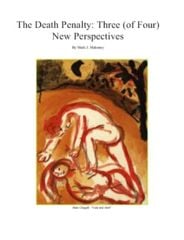
Mark was invited to present this paper to the International Symposium on Violence Reduction in Threory & Practice presented in June of 1999 by the Colloquium on Violence & Religion ("COVR") and the Department of Religion at Emory University, in Atlanta. The COVR is an international association of scholars founded in 1990. It is dedicated to the exploration, criticism, and development of René Girard's model of the relationship between violence and religion in the genesis and maintenance of culture. The paper explores the role of this model of "mimesis" and "scapegoating" in relation to the death penalty in the United States, from a tactical perspective at trial to a constitutional argument that the death penalty, as an inherently religious ritual, involves the Establishment of Religion in violation of the First Amendment.
Document Processing for the Criminal Defense Lawyer
The vast majority of lawyers, and this includes the largest law firms, fail to understand the most essential word processing tools that are "under the hood" of Word and WordPerfect. Hundreds of hours are wasted in manually repeating tasks that can easily be accomplished -- and standardized across a law firm's platform -- in a single step. Similarly, lawyers misunderstand the relationship between word processing programs and the PDF format, and therefore miss important steps which can make PDF documents more useful to courts, clients, and themselves. This article addresses these and more issues in document processing.
The Right to Present a Defense
"The Right to Present a Defense" is a work that began in 1980 as a recapitulation of the seminal articles by Prof. Peter Westen on the compulsory process clause. It has been widely circulated around the country among criminal defense lawyers and is the only available source dedicated specifically to explicating this critical constitutional right.
Writing the Criminal Appeal Brief
The latest version of "Writing the Criminal Appeal Brief" was presented at the Fall meeting of the National Association of Criminal Defense Lawyers, in Boston. It surveys a range of tactical, technical, typographical, and theoretical issues in appellate advocacy, with some examples.
Principles for Prosecutors Considering Child Pornography Charges Against Persons with Asperger's Syndrome
A large number of Autism and Asperger's research and support organizations have signed on to the position paper "Principles for Prosecutors Considering Child Pornography Charges against Persons with Asperger's Syndrome"
The “Notre Dame Ten”
The Dow-CIA Protest of November 18, 1969; 50th Anniversary
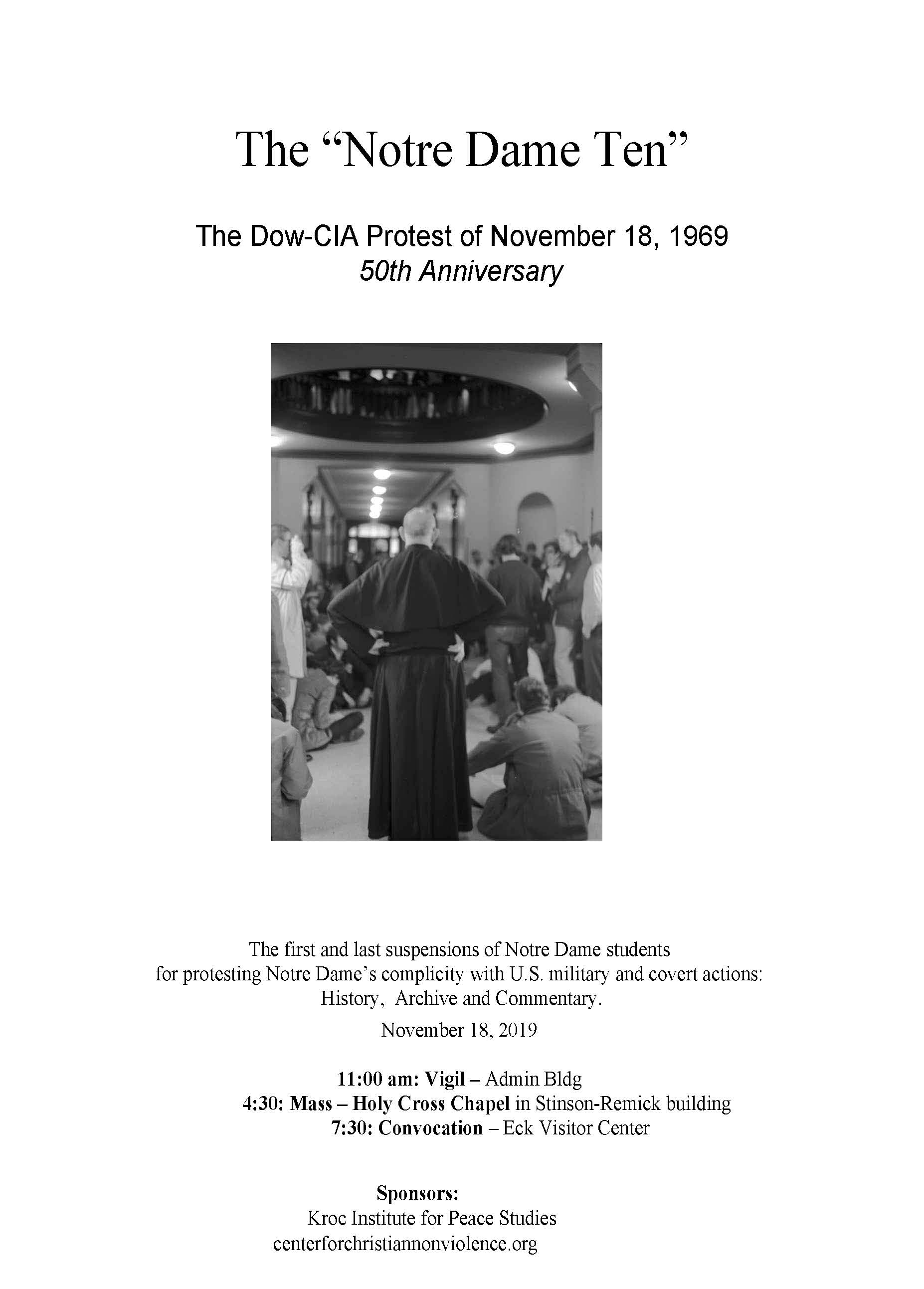
This booklet contains an archive of selected original documents related to the 1969 Dow-CIA protest and the "Notre Dame Ten," Additionally there are a variety of related articles in campus publications, as well as statements of some of the "Ten" and former teachers, Rev. Emmanuel Charles McCarthy and Carl Estabrook, at the 25th and 40th Anniversary events.